
What Is JSON LD and Why Is It Best for Structured Data
TL;DR: This article explains JSON LD with practical examples for Shopify merchants, SEO teams, and agencies. For implementation context, see How SchemaForgeAI works, then validate outputs using Rich Results Test.
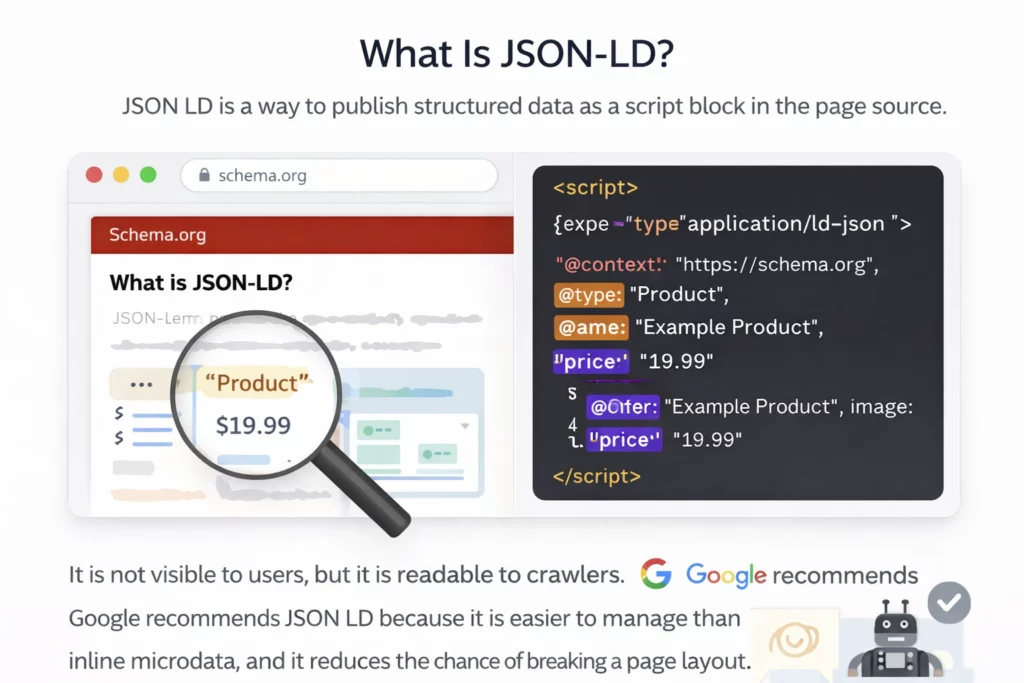
What JSON LD is and how it differs from other formats
JSON LD is a way to publish structured data as a script block in the page source. It is not visible to users, but it is readable to crawlers. Google recommends JSON LD because it is easier to manage than inline microdata, and it reduces the chance of breaking a page layout.
Older approaches like microdata embed structured properties directly into HTML elements. That can work, but it can become hard to maintain as templates change. JSON LD allows you to update structured data without rewriting the content markup.
For Shopify stores, maintainability matters. Themes change. Apps change. Product templates change. JSON LD makes it more practical to keep structured data stable over time.
A common mistake is to publish JSON LD that does not match what is on the page, such as marking up reviews that are not visible. This can create trust issues and can reduce eligibility for enhanced search features.
Start with the Google structured data intro for recommended practices.
SchemaForgeAI generates JSON LD so you can review output before applying it. That is important for experience, expertise, authoritativeness, and trust signals, because structured data should match the visible page content.
If you publish many schema types, consider using an organized graph structure with consistent identifiers. This helps keep entities connected and reduces duplication.
How JSON LD supports validation and reliable publishing
Because JSON LD is separated from content markup, it is easier to validate and troubleshoot. You can copy the JSON LD output, run it through validation tools, then adjust only the structured data as needed.
For SEO teams, this speeds up iteration. You can test variants, fix missing fields, and keep identifiers consistent without changing the theme template.
For generative AI systems and entity models, JSON LD helps provide explicit, structured context. This can support better interpretation of your brand, products, and categories, especially when your site content is sparse or when products have similar names.
A practical publishing standard is to keep one Organization and one WebSite entity identifier across all pages. Then connect each WebPage, Product, or CollectionPage node back to that identifier. This improves coherence and reduces ambiguity.
Validate with Schema Markup Validator and check eligibility in Rich Results Test. For FAQ vocabulary, reference Schema.org FAQPage.
The key rule is simple. Publish structured data that matches your content. Use clean identifiers, avoid duplication, and validate after every meaningful change.
If you ever see a sudden rise in warnings, it often correlates with a theme update or a new app that outputs schema. Validate again and remove duplicated blocks.
Helpful links
Internal pages: How SchemaForgeAI works, Contact support.
External references: Google structured data intro, Schema Markup Validator, Rich Results Test, Schema.org FAQPage.
Frequently Asked Questions
Does JSON LD affect page speed
JSON LD is lightweight. When implemented properly it has minimal performance impact compared to images and scripts.
Can I publish multiple JSON LD blocks
Yes. Multiple blocks are fine as long as they are consistent, non duplicate, and accurately represent the page content.
Should schema match visible content exactly
Yes. Mismatches can trigger trust issues and can reduce eligibility for rich results.
What is the best way to structure many schema types
Use consistent identifiers and connect nodes logically, often using a graph approach, so search engines can interpret relationships clearly.