
What Is Shopify Schema Markup and Why Does It Matter for SEO
TL;DR: This article explains Shopify Schema Markup with practical examples for Shopify merchants, SEO teams, and agencies. For implementation context, see How SchemaForgeAI works, then validate outputs using Rich Results Test.
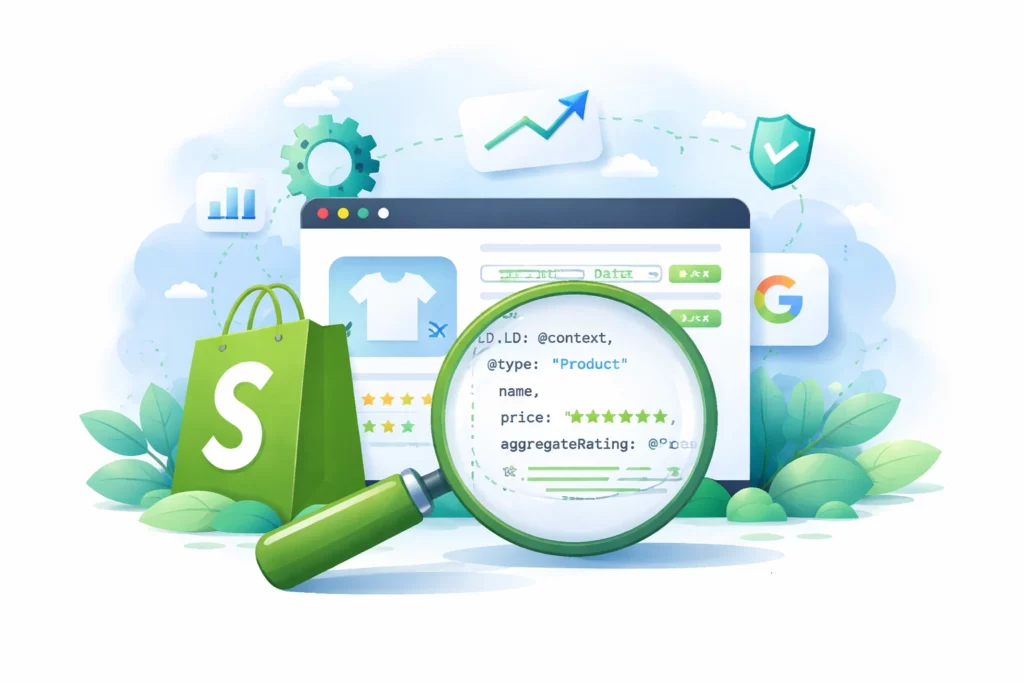
How schema markup works on Shopify
Schema markup is structured data that describes what a page represents using a vocabulary that search engines understand. On Shopify, schema is usually added as JSON LD within the page source. When it is accurate and consistent, it can help search engines interpret products, offers, and navigation paths.
Many Shopify themes include basic Product schema. That default markup can be a decent starting point, but it is often limited to product pages and it is rarely designed for page level control. If you want structured data to reflect how your store is actually organized, you typically need a system that can cover collections, content pages, and site wide entities in a consistent way.
Google recommends JSON LD because it is easier to maintain and less likely to break page layouts than older inline approaches. For a deeper explanation, review the Google structured data guide and the Schema.org Product definition.
Google recommends JSON LD, and you can learn the basics in the Google structured data guide. For product markup vocabulary, reference Schema.org Product.
SchemaForgeAI focuses on safe deployment through a Shopify theme extension, so you can inject structured data without editing theme files. That makes maintenance easier, especially when themes are updated or when multiple people work on the store.
If you are using an SEO plugin or a theme that already outputs schema, the goal is not to add more schema. The goal is to make the schema you publish correct, non duplicate, and aligned with the page content. Clean structured data is easier for crawlers to trust.
A practical habit is to document which schema types you publish on each page type. This reduces drift over time and makes troubleshooting far faster when a new theme feature or app adds markup.
Why schema supports rich results and AI understanding
Schema does not guarantee rich results, but it can increase eligibility for enhanced search features, such as product snippets, breadcrumb enhancements, and FAQ rich results where applicable. Eligibility depends on Google policies, page quality, and the query context.
In addition to classic search, structured data supports how systems interpret entities, meaning the people, brands, products, and categories represented on your site. When your store has consistent Organization, WebSite, Product, and collection level structured data, it becomes easier for systems to connect your pages to a coherent brand entity.
For SEO teams, the practical win is clarity. You are reducing ambiguity about what your pages are, what they contain, and how they relate to each other. For generative AI systems, the win is stronger entity signals that can help reduce misinterpretation when your store is summarized.
Validate outputs using Rich Results Test and Schema Markup Validator.
A good workflow is to generate schema, validate it, then monitor how Google reports it. Use Rich Results Test for eligibility checks and Schema Markup Validator for syntax and vocabulary checks. After that, watch Google Search Console enhancements and performance trends over time.
When you publish FAQs, keep answers concise and directly supported by on page content. Structured data should never promise features the page does not actually provide.
Helpful links
Internal pages: How SchemaForgeAI works, Pricing, Contact support.
External references: Google structured data guide, Schema.org Product, Rich Results Test, Schema Markup Validator.
Frequently Asked Questions
What is JSON LD schema
JSON LD is a structured data format that publishes machine readable information in a script tag. Google recommends it because it is easier to maintain and less likely to break layouts.
Does schema improve rankings
Schema is not a direct ranking factor, but it supports rich result eligibility and helps search engines interpret page meaning more reliably.
How do I validate Shopify schema
Use Rich Results Test for eligibility signals and Schema Markup Validator to confirm the structured data is valid and uses the correct vocabulary.